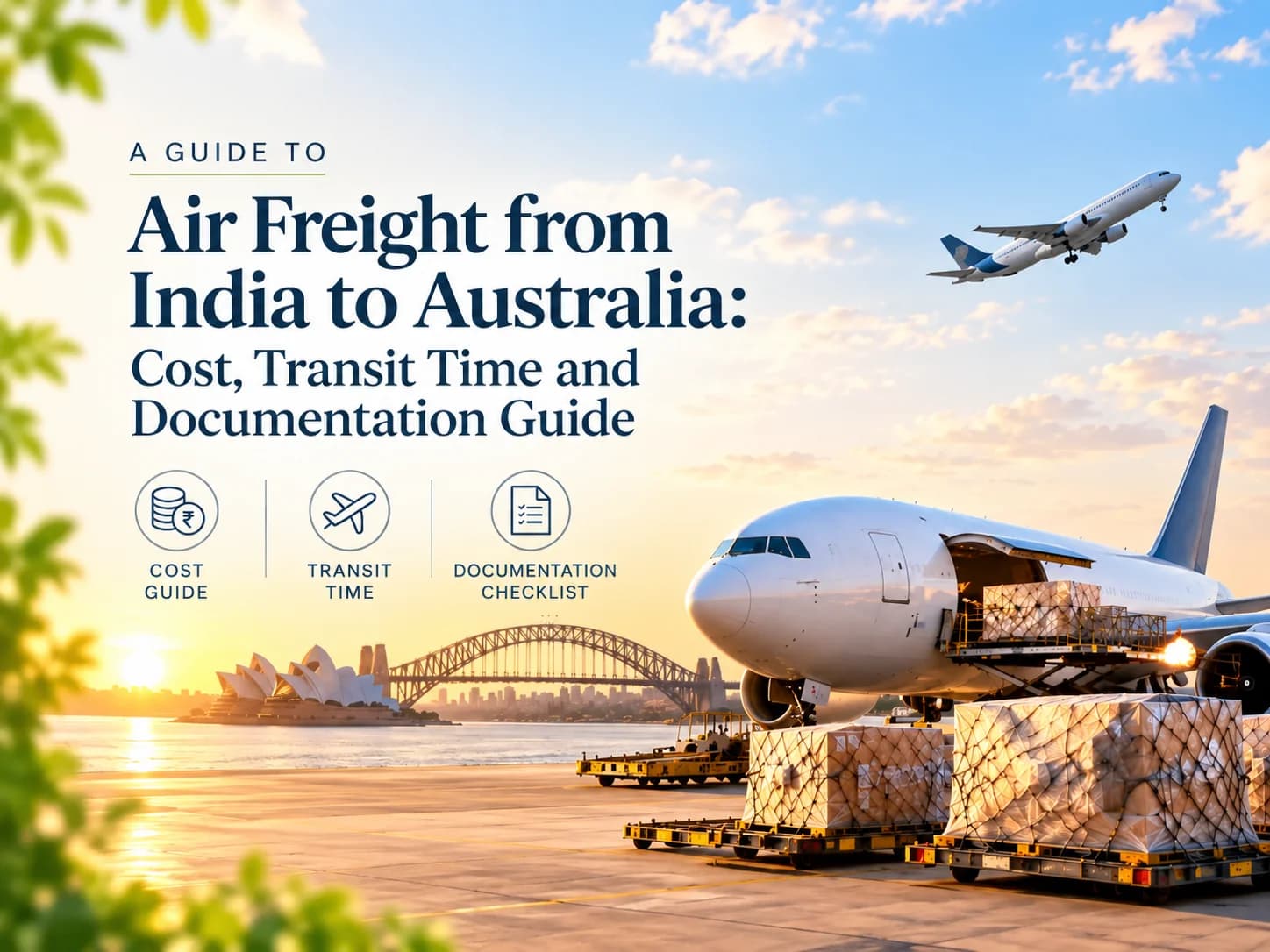
Air Freight from India to Australia: Cost, Transit Time and Documentation Guide
Shipping goods by air is a practical option for businesses that need to move products quickly from India to Australia. Whether you export textiles, engineering components, pharmaceuticals, samples, or commercial goods, understanding freight costs, transit times, and documentation can help you plan your shipment more effectively. This guide explains how air freight from India to Australia works, what affects shipping costs, which documents you may need and how to prepare your cargo for Australian customs clearance.
"Successful international shipping starts with the right preparation — from documentation to delivery."
How Does Air Freight from India to Australia Work?
Air freight involves transporting goods by aircraft from an Indian airport to an Australian destination. Depending on the shipment, cargo may travel on a direct flight or through a connecting airport.
Major Indian cargo gateways include Mumbai, Delhi, Chennai and Bengaluru. Common Australian destinations include Sydney, Melbourne, Brisbane and Perth.
The process generally involves five steps:
- Booking: Share your cargo details, destination, and delivery requirements with a freight forwarder.
- Pickup and packing: Prepare the goods according to airline requirements and arrange transportation to the departure airport.
- Export clearance: Complete the required export documentation and customs formalities in India.
- Air transportation: The cargo travels to Australia, directly or through a connecting airport.
- Import clearance and delivery: Australian authorities assess the shipment before it is released for collection or final delivery.
How Much Does Air Freight from India to Australia Cost?
The cost of air freight from India to Australia depends on the shipment's weight, dimensions, cargo type, route and service requirements. There is no single rate that applies to every shipment.
Freight forwarders generally calculate air freight charges using either the actual weight or the volumetric weight, whichever is higher. This is known as chargeable weight.
For example, a large carton containing lightweight products may occupy more aircraft space than its actual weight suggests. The volumetric calculation helps account for the space used.
Other factors that influence the final cost include:
- Shipment weight and dimensions: Larger or heavier consignments can attract different rates.
- Departure and arrival airports: Available routes and airline capacity affect pricing.
- Cargo type: Dangerous goods, temperature-sensitive products and specialised shipments may require additional handling.
- Service speed: Express services may cost more than standard air freight.
- Additional charges: Pickup, packing, customs brokerage, terminal handling, insurance and final delivery may be charged separately.
To receive an accurate quotation, provide your freight forwarder with the pickup location, destination, cargo description, number of packages, dimensions, actual weight and preferred delivery date. Ask whether the quotation includes destination charges, customs clearance and door delivery.
How Long Does Air Freight Take from India to Australia?
Air freight is generally much faster than sea freight, making it suitable for urgent orders, business samples and time-sensitive shipments. As a general planning estimate, air cargo may take around 3–6 days, depending on the route and service. This is an indicative timeframe, not a guaranteed delivery period. The actual schedule may vary according to flight availability, connecting routes, cargo handling and customs clearance. Allow additional time for pickup, export processing, import inspections and final delivery. Shipments requiring permits, treatment or further examination may take longer. If your business has a fixed delivery deadline, confirm the estimated arrival date and clearance arrangements before booking.
What Documents Are Required for Air Cargo?
The documents required depend on the products being shipped, their value and applicable import conditions. Common documents include:
- Commercial invoice: Describes the goods, their value, quantity and seller and buyer details.
- Packing list: Shows the number of packages, contents, dimensions and weight.
- Air Waybill (AWB): Records key shipment details and serves as the air cargo transport document.
- Export documentation: Includes the applicable export declaration and shipping bill in India.
- Import declaration: Australian import requirements depend on the consignment's value and circumstances. Goods valued above AUD 1,000 generally require an Import Declaration when entering home consumption; air cargo valued at AUD 1,000 or less generally requires a Self-Assessed Clearance declaration.
- Permits and certificates: Certain goods require additional approvals, treatment certificates or other supporting documents.
Australia also has strict biosecurity requirements. Food, plant products, animal-derived materials and wooden packaging may require additional checks or treatment. Verify the conditions for your specific goods before dispatch. Official guidance is available from the Australian Border Force and the Department of Agriculture, Fisheries and Forestry.
Plan Your India-to-Australia Shipment with Confidence
Successful international shipping starts with the right preparation. By confirming chargeable weight, comparing freight quotations, preparing accurate documents, and checking Australian import requirements, businesses can reduce unexpected costs and avoid preventable delays. Dakshin Global can help businesses understand their freight requirements and plan suitable shipping arrangements. Share your cargo details, origin, destination, and delivery timeline to discuss the right air freight solution for your shipment.
Frequently Asked Questions
Contact Dakshin Global to discuss your air freight requirements and plan your India-to-Australia shipment.
Contact UsAbout the Author
Dakshin Global Team
The Dakshin Global team specialises in import & export, logistics, and customs solutions. We share insights to help businesses navigate the global trade landscape with confidence.
Recent Posts
October 30, 2026
Indian Flour Mill Machine Buying Checklist for Austr…
October 30, 2026
Best Indian Flour Mill for Home Use in Australia: Wh…
October 30, 2026
How to Choose Bulk Grain Suppliers in Australia: A C…
September 01, 2026
7 Indian Grains You Can Add to Your Everyday Diet